
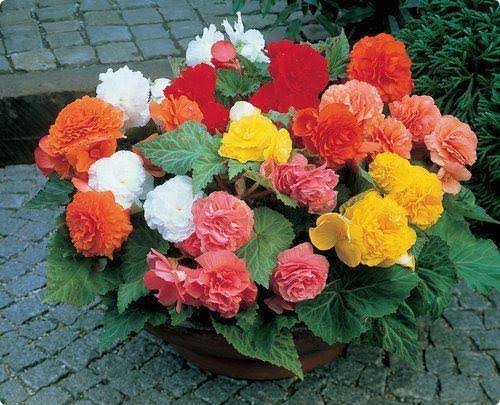
Begonia tuberhybrida F₁ Nonstop® Mix
- The Industry Leader in Tuberous Begonias
- Early lateral branching for premium quality production
- Uniform in vigor, habit and flowering
- Large, fully double flowers up to 4” / 10 cm
- A full color range including bicolors
When to Plant Begonia Seeds
Begonia seeds are incredibly tiny, so begin your journey by sowing seeds indoors, ideally six to eight weeks prior to the last expected frost.
Where to Plant Begonia Seeds
Begonias are tender and can be damaged by cold, but full sun can also scorch leaves. Once your seedlings are ready to be transplanted, choose a spot with morning sun and afternoon shade, where it can thrive in dappled light throughout the day. Their ideal temperature range is between 60°F and 80°F.
How to Plant Begonia Seeds
Begonia seeds are tiny, almost like dust, so use care when opening your seed packet. Lightly spread the seeds atop a moist mixture of 50/50 peat moss and sand or perlite. Begonia seeds require light to germinate effectively, so avoid burying them deeply. Gently use a spray bottle to mist the seeds to help with seed-to-soil contact and not to wash or blow them away. Cover the seedling tray with a sheet of clear plastic, a lid, or a humidity dome to maintain the soil’s moisture, and keep it at a warm temperature between 70°F to 75°F. Utilizing bottom heat can enhance the germination success. Expect seedlings to emerge within 15 to 21 days. Patience is key, as begonia seeds take time to sprout.
Once seedlings appear, they need ample light. Position them on a sunny windowsill or set up three to four inches below fluorescent plant lights. Lights should be on for 16 hours a day and off for eight hours to mimic natural day-night cycles. Avoid incandescent bulbs due to excessive heat.
When seedlings develop two sets of leaves, thin them to one per cell. Despite their tiny initial size, begonias grow rapidly..






Reviews
There are no reviews yet.