
Cultural Information for: Zinnia Profusion Annual
Common Name: Zinnia
Botanical Name: Zinnia hybrida
Seed Count: 7,000-11,500/oz. 250-400/gr.
Optimum Germination Temperature: 76°F / 25°C
Optimum Growing Temperature: 65-70°F / 18-21°C
Optimum pH: 5.8 – 6.2
EC – Plug: 0.4 – 0.8 mmhos/cm (1:2) / 0.9 – 2.0 (SME) / 1.1 – 2.6 (Pour Thru)
EC – Finishing: 0.9 – 1.3 mmhos/cm (1:2) / 2.1 – 3.5 (SME) / 2.7 – 4.6 (Pour Thru)
Plug Culture – 4 weeks (200 / 10 x 20 tray)
Stage 1 (days 1-5) Use a well-drained media with a low nutrient charge.
Prior to sowing, water the plug tray to the point of drip. Then, sow the
seed and cover with a light cap of medium vermiculite. Do not water
after sowing, neither the day of sowing nor the day following sowing.
Then, water the seedlings as needed allowing the media to dry slightly in
between watering. An overly wet soil will decrease germination.
Optimum soil temperature is 76°F/25°C.
Stage 2 (days 6-10) Zinnias germinate quickly. After emergence place
the plug trays in a well-ventilated greenhouse with high light. Maintain a
day temperature of 70°F/21°C and a night temperature of 65°F/18°C. A
light application of fertilizer at 50-100 ppm N will greatly benefit in
helping to establish strong and healthy seedlings.
Stage 3 (days 11-21) Water and fertilize Zinnias as needed to maintain
healthy plugs. An application of 100 – 150 ppm N is recommended at
least once a week. Watering just before wilt is recommended to avoid
lush growth. Water thoroughly to prevent high EC levels, (> 2.0 SME).
Watering early in the morning allows the foliage to dry thoroughly and
prevents potential disease problems. If necessary, one can apply B-Nine®
(daminozide) at 2,500 ppm/0.25% to check growth 15-17 days after
sowing.
Stage 4 (days 20-28) Zinnias develop rapidly and are often ready to
transplant after three weeks, (depending upon the plug cell size used).
Option to drop the air temperature to 62 °F/17°C to hold plug trays for a
few days. Avoid temperatures below 60°F/15°C which invites disease.
Lighting: Zinnia Profusion flowers more quickly under short day
length (< 12 hours). To delay flowering and build plant body, extend
the day length to 16 hours from day 15 to day 28. For large
containers (4 inch / 10 cm.) use a 128 (8 x 16 cells) plug tray and
provide long days from days 15 – 42.
Finished Production: 5-8 weeks
Container Size: Zinnia Profusion is a dwarf variety with strong basal
branching. It is best to sell Zinnia Profusion in the green stage (no color)
for high-density cell packs (>36 cells). For color sales, use larger
containers, such as an 18-cell pack or 4 inch/10 cm. pot.
Media: Peat-lite mixes with a blend of peat, perlite and vermiculite work
well at a soil pH of 5.8 – 6.2.
Temperature: Zinnia is sensitive to disease and cool temperatures can
invite disease and foliar problems (below 60°F/16°C). Warm
temperatures can stretch the plants (above 75°F/24°C). Profusion is very
disease tolerant, but the above guidelines are recommended.
Fertilizer: Weekly applications of 200-250 ppm N using a well-balanced
calcium nitrate-based fertilizer helps to produce plants of high quality.
Zinnia is sensitive to boron deficiency, characterized by tip abortion,
crinkled leaves and leaf edge burn. Applying 0.25 ppm of boron with
each fertilizer application is necessary.
Insects: Aphids and thrips
Disease: Zinnia Profusion offers good disease tolerance and in general is
not attacked by the many foliar diseases that affect zinnia. Good
sanitation and growing culture will also aid in keeping the plants healthy.
Do not place heavy mulch around the base of the plants as this may cause
stem rot at the soil line.
Scheduling:
Container Weeks from Sow Comment
Cell Pack 9-10 weeks Best sold green
4 inch/10 cm. 10-11 weeks 1 plant per pot
6 inch/15 cm. 11-12 weeks 3 plants per pot
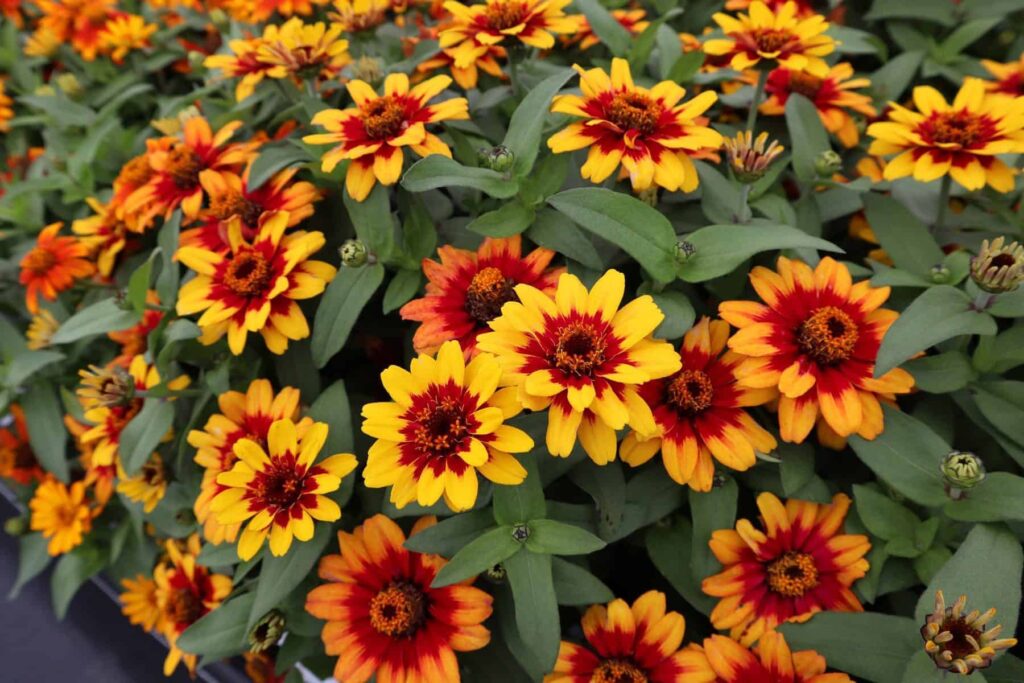
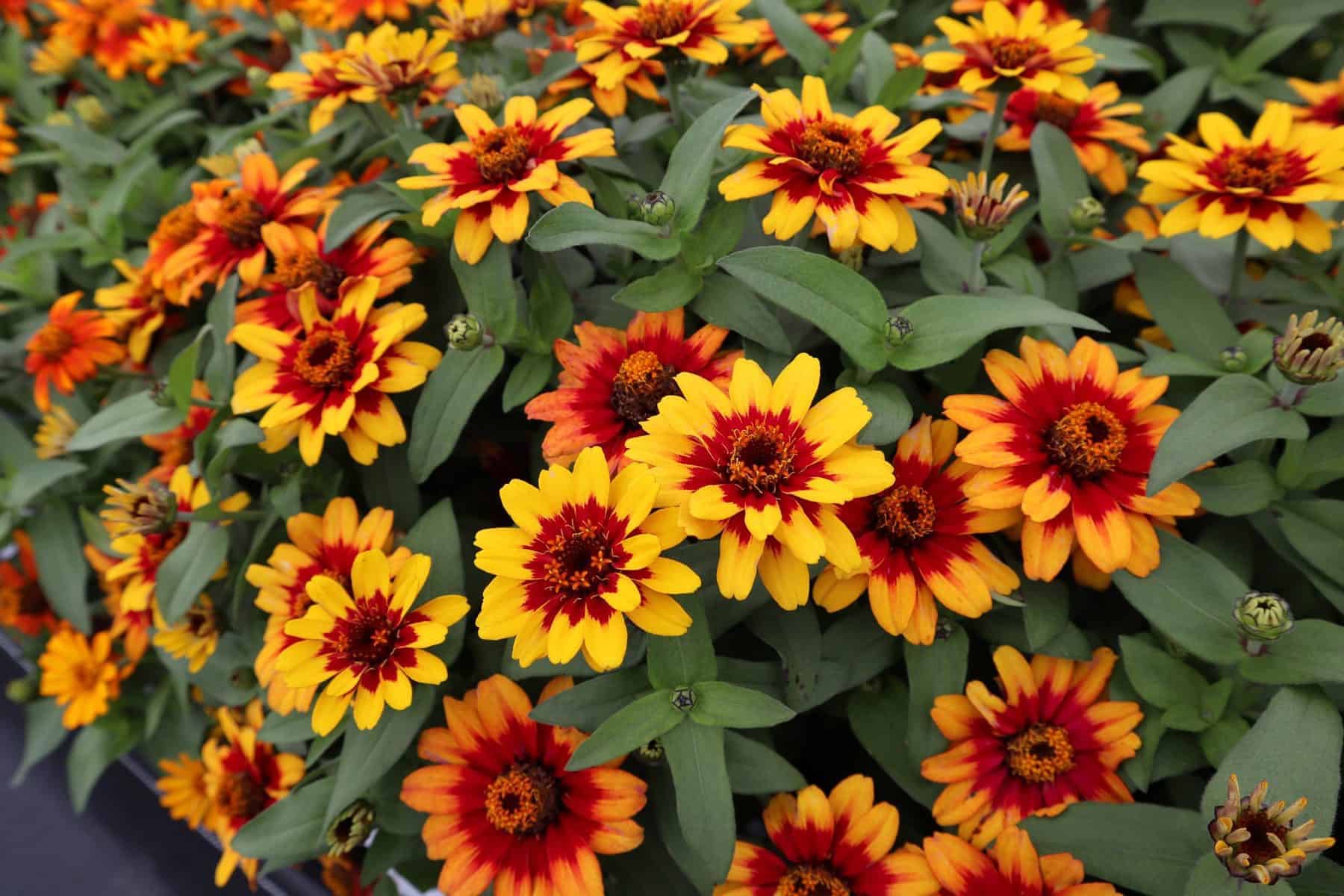
Features: Zinnia Profusion is available in both single and double
flowers. Basic culture is identical for both types. Plants ultimately will
grow to 18 inches/45 cm. tall by 24/ inches/60 cm. wide. Warmer areas,
with a longer growing season, should allow for greater spacing.
“All information given is intended for general guidance only and may
have to be adjusted to meet individual needs. Cultural details are based
on North American conditions and Sakata cannot be held responsible for
any crop damage related to the information given herein. Application of
recommended growth regulators and chemicals are subject to local and
state regulations. Always follow manufacturer’s label instructions.
Testing a few plants prior to treating the entire crop is best.”



Reviews
There are no reviews yet.